Welcome to AZMedicalScience — a dedicated platform for healthcare professionals to access specialized scientific content and research.

Header Logo
  • Respiratory & Immunology
  • Cardiovascular, Renal & Metabolism
  • Oncology
  • Rare Disease

Welcome to AZMedical Science

AZMedical Science is a website developed by AstraZeneca to provide non-promotional, disease state education for healthcare professionals.


Please note that the content available on this website may vary depending on your location, in accordance with local regulatory requirements.


By clicking "Enter," you confirm that you are a licensed healthcare professional and understand the nature of this content.

I am an AstraZeneca authorized person

Exit

Burden of COPD

Explore the latest in COPD science
  • Home
  • Burden of COPD
  • Inflammation in COPD
  • Mucus dysfunction in COPD
  • IL-33 in COPD
  • Resources

Snapshot

Many patients with COPD continue to experience exacerbations despite triple inhaled
therapy, leading to substantial
systemic steroid exposure1,2

Oral corticosteroid exposure and exacerbations contribute to adverse outcomes, including increased cardiopulmonary risk and
premature mortality1,3

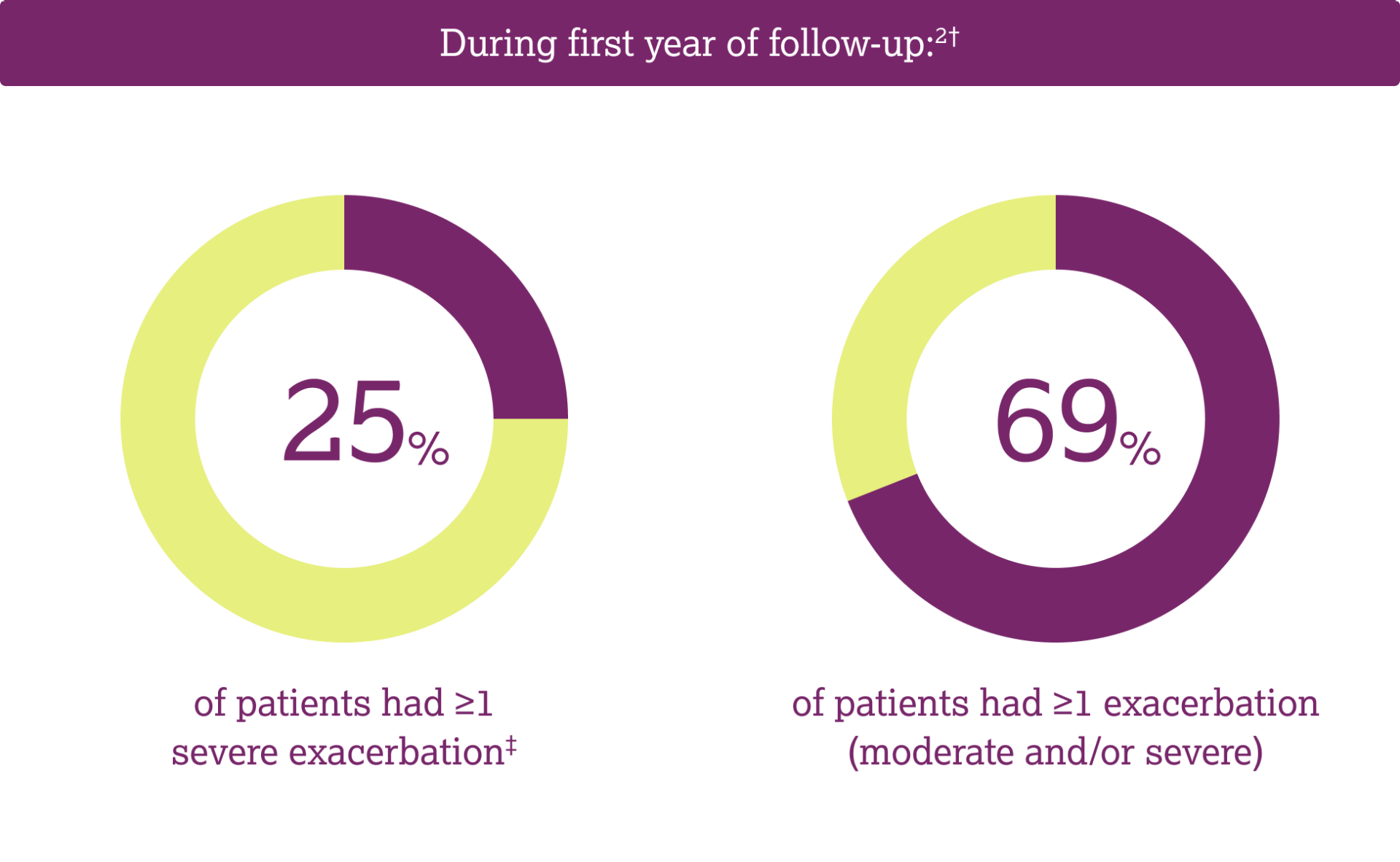
Over half of patients with COPD receiving triple inhaled therapy have been shown to continue to experience exacerbations1,2

View the data

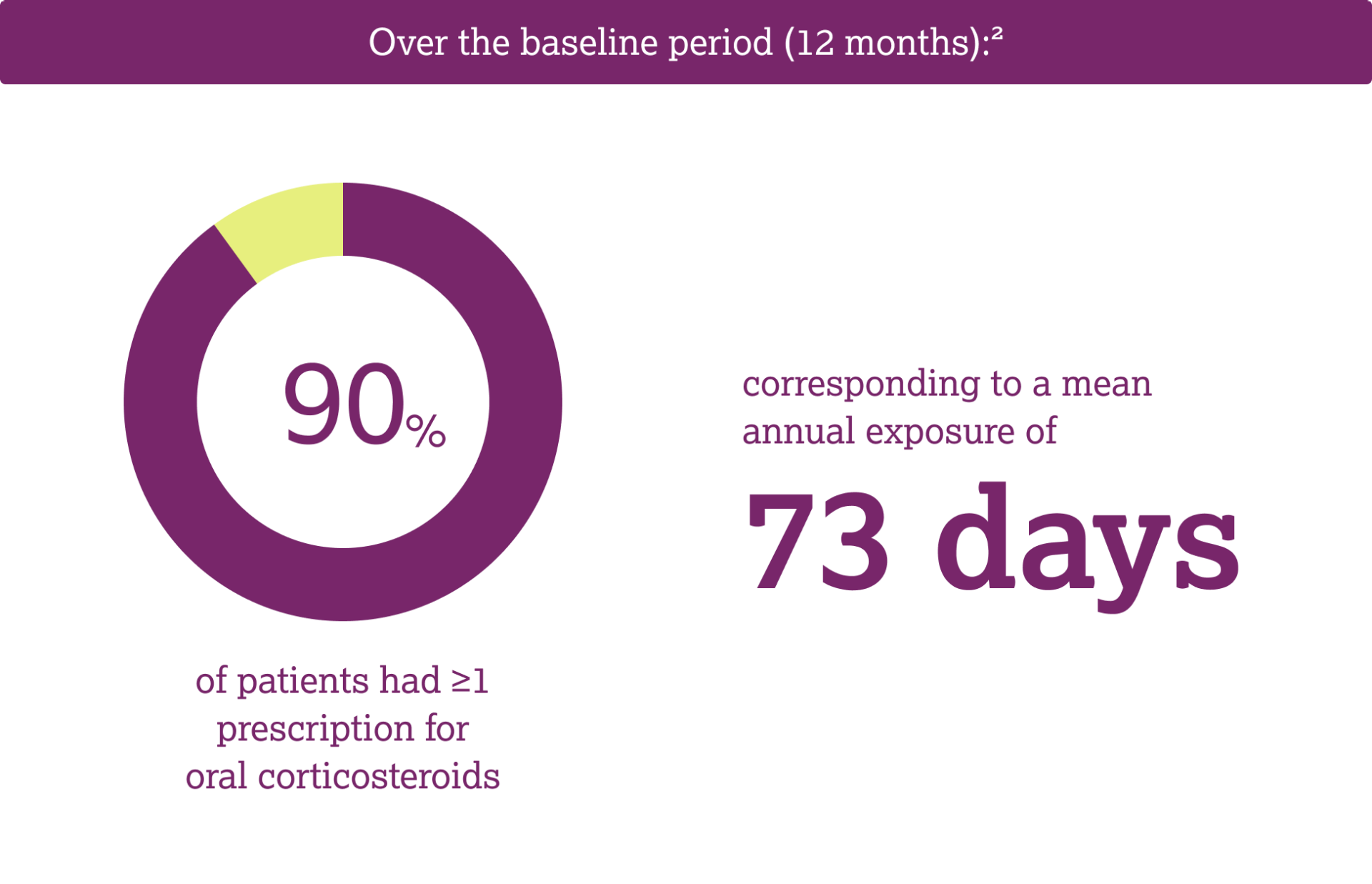
Patients with COPD exacerbating on triple therapy were exposed to systemic steroids for
1 in every 5 days of the year1,2

View the data

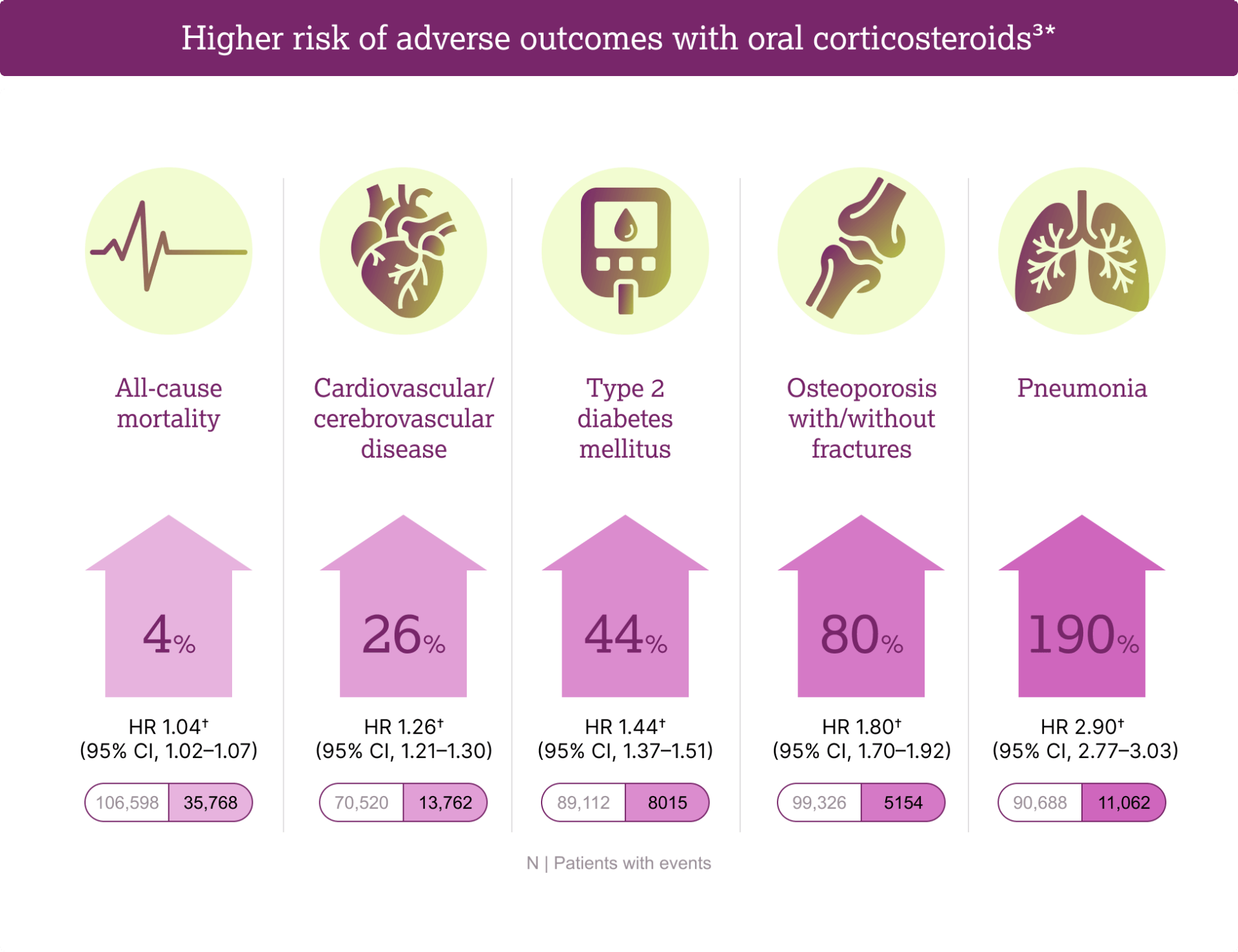
Oral corticosteroid exposure is associated with increased risk of adverse outcomes in patients with COPD3*

View the data

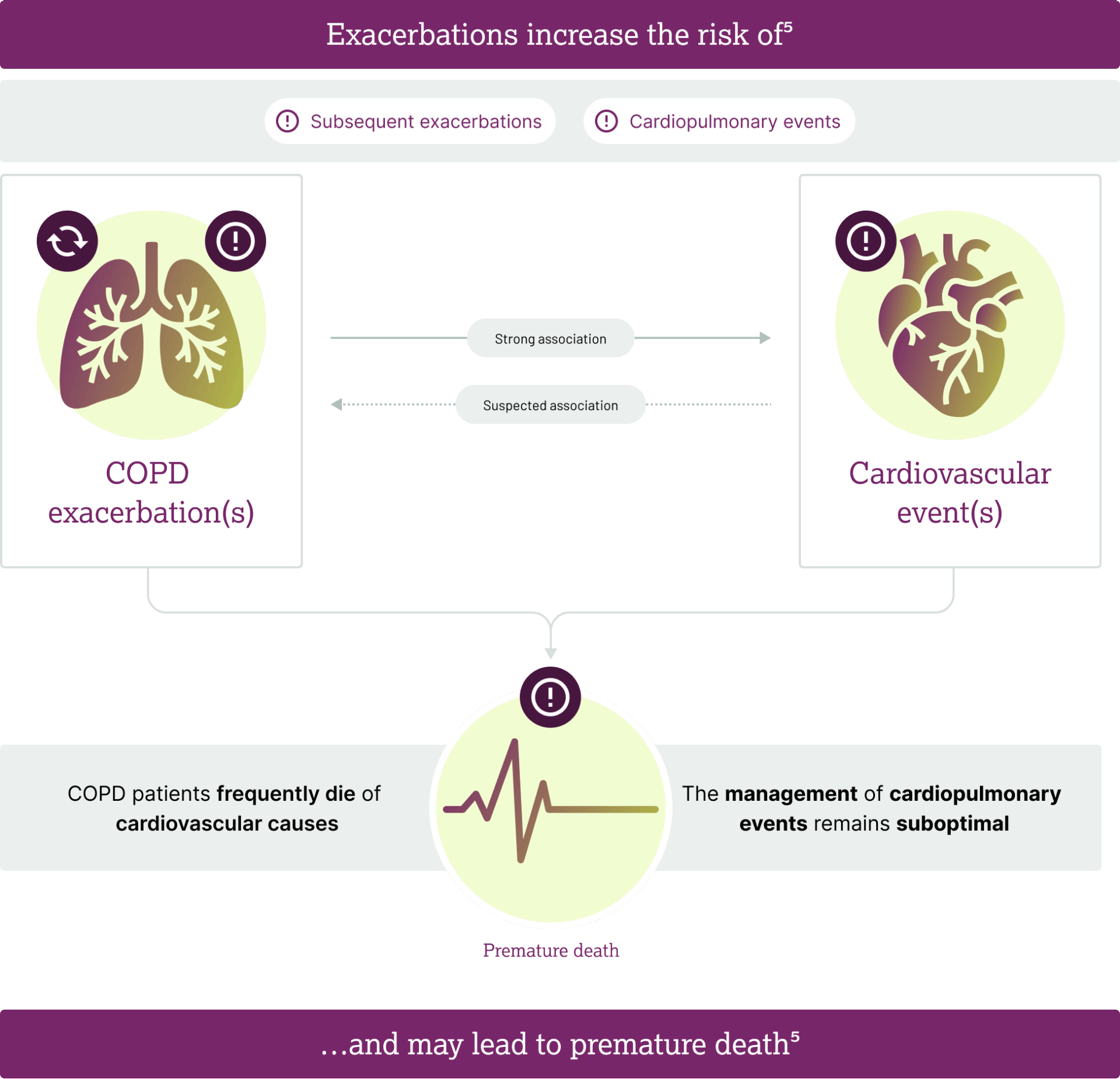
Exacerbations are a key component of cardiopulmonary risk in COPD and can be associated with
premature death4,5

View the data

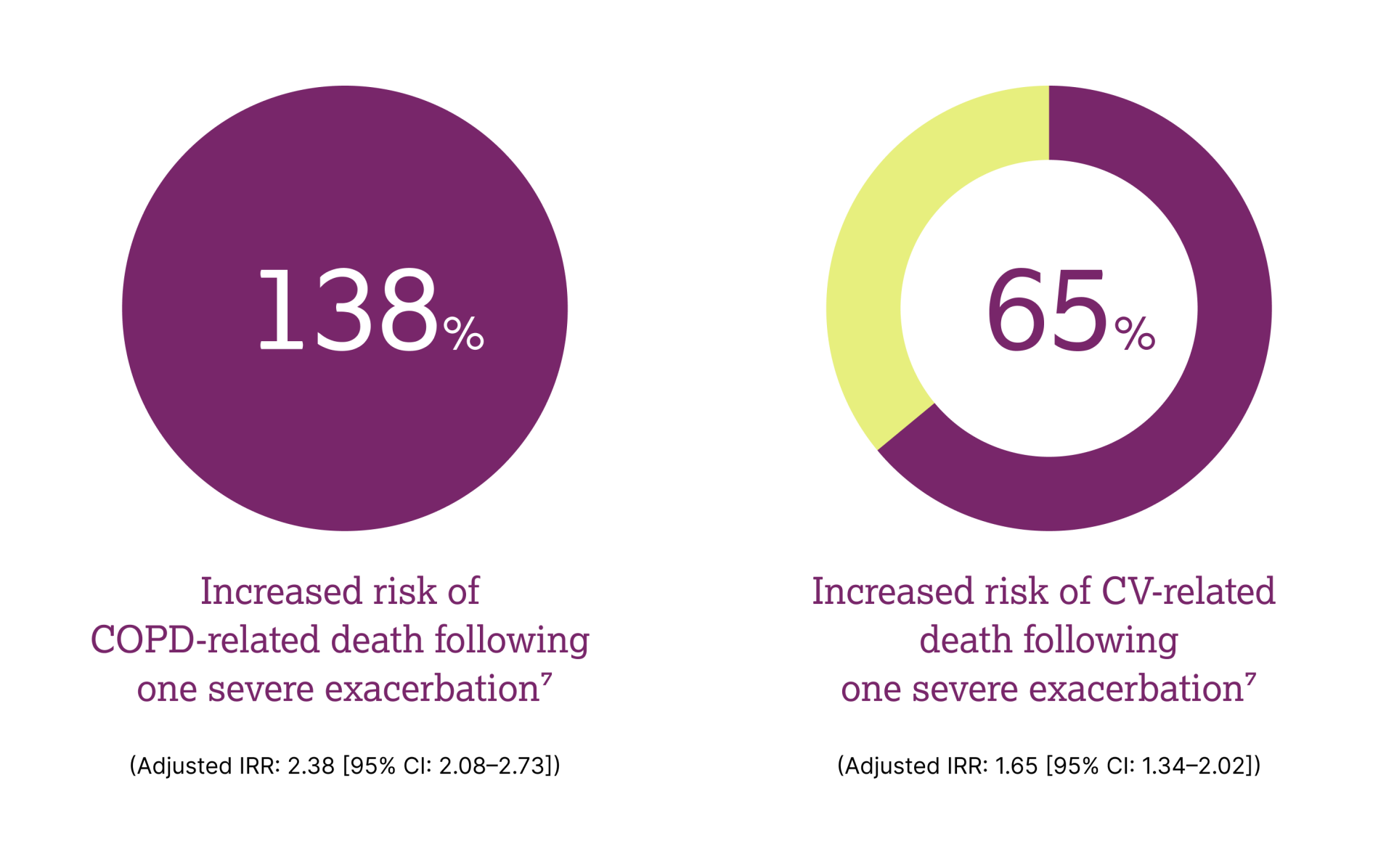
Experiencing even one exacerbation* can profoundly increase the risk of
premature mortality6,7†

View the data
  1. <h4>Over half of patients with COPD receiving triple inhaled therapy have been shown to continue to experience exacerbations<sup>1,2</sup></h4>
  2. <h4>Over half of patients with COPD receiving triple inhaled therapy have been shown to continue to experience exacerbations<sup>1,2</sup></h4>
  3. <h4>Over half of patients with COPD receiving triple inhaled therapy have been shown to continue to experience exacerbations<sup>1,2</sup></h4>
  4. <h4>Over half of patients with COPD receiving triple inhaled therapy have been shown to continue to experience exacerbations<sup>1,2</sup></h4>
  5. <h4>Over half of patients with COPD receiving triple inhaled therapy have been shown to continue to experience exacerbations<sup>1,2</sup></h4>

Home

Previous

Inflammation in COPD

Next

Frequently asked questions

What does ‘dysregulated IL-33’ mean?

IL‑33 is released upon stress or cell damage to initiate a host response—what was adaptive turns maladaptive or ‘dysregulated’ when its levels chronically surpass buffering mechanisms and signalling is persistent1–8

How does smoking affect the IL-33 pathway in patients with COPD?

In COPD, smoking status affects the IL‑33 axis—former smokers show elevated IL-33 compared to current smokers, while current smokers show reduced sST2 and more oxidized IL‑33, indicating aberrant IL‑33–ST2 signalling in both groups9–12

How does the role of IL-33 in COPD differ from other epithelial cytokines?

Damage to the epithelium triggers the release of upstream, alarmin cytokines. IL-33 is pre-formed, rapidly released and initiates a broad inflammatory cascade encompassing Type 1, Type 2 and Type 3 responses1,13,14

What evidence would suggest my patient with COPD has dysregulated IL-33 signalling?

Frequent exacerbations, productive cough and persistent airway/systemic inflammation may suggest heightened IL‑33

pathway activity15–17

What are the potential consequences of dysregulated IL-33 signalling?

IL-33 through its dual forms can drive Type 1 and 3 and Type 2 (eosinophilic, subset) inflammation, and mucus dysfunction, which are key drivers of COPD pathogenesis1–3,12,15

What is mucus dysfunction and what is the impact for patients with COPD?

Mucus dysfunction is the pathological changes in mucus volume, composition and clearance, the airway manifestations of these pathological changes, and the downstream

clinical consequences12,15,18–25

  1. sss
  2. sss
  3. sss
  4. sss
  5. sss
  6. sss

  1. Cayrol C. Cells. 2021;11(1):107
  2. Calderon AA, et al. Eur Respir Rev. 2023;32(167):220144
  3. Brightling CE, et al. Eur Respir J. 2019;54(6):1900651
  4. England E, et al. Sci Rep. 2023;13(1):9825
  5. Rabe KF, et al. Am J Respir Crit Care Med. 2023;208(4):395–405
  6. Keddache S, et al. Clin Immunol. 2021;229:108798
  7. Scott IC, et al. Biochem Soc Trans. 2018;46(5):1345–1353
  8. Burgoyne RA, et al. Cells. 2021;10(10):2763
  9. Abdo M, et al. Eur Respir J. 2024;64(3):2400347
  10. Faiz A, et al. Am J Respir Crit Care Med. 2023;208(10):1075–1087
  11. Faiz A, et al. Am J Respir Crit Care Med. 2023;208(Suppl.):1075–1087
  12. Strickson S, et al. Eur Respir J. 2023;62(3):2202210
  13. Cayrol C, Girard JP. Cytokine. 2022;156:155891
  14. Varricchi G, et al. Eur Respir J. 2024;63(4):2301619
  15. Diaz AA, et al. JAMA. 2023;329(21):1832–9
  16. Shen Y, et al. Int J Chron Obstruct Pulmon Dis. 2018;13:399–407
  17. Rodrigues SO, et al. Pharmaceuticals (Basel). 2021;14(10):979
  18. Fahy JV, Dickey BF. N Engl J Med. 2010;363(23):2233–2247
  19. Stott-Miller M, et al. Int J Chron Obstruct Pulmon Dis. 2020;15:2467–2476
  20. Hughes R, et al. Respir Med. 2022;200:106921
  21. Choate R, et al. Chronic Obstr Pulm Dis. 2020;7(1):49–59
  22. Cook N, et al. Int J Chron Obstruct Pulmon Dis. 2019;14:1365–1376
  23. Tian PW, Wen FQ. J Transl Int Med. 2015;3(3):89-92
  24. Mettler SK, et al. N Engl J Med. 2025;392(19):1973–1975
  25. Zhou D, et al. Expert Rev Respir Med. 2025:1–7

Stay ahead

Sign up for the latest updates on new content

Sign up

Back to top

ICS, inhaled corticosteroids; LABA, long-acting β2-agonist; LAMA, long-acting muscarinic antagonist; SABA, short-acting β2-agonist; SAMA, short-acting muscarinic antagonist

  1. Nordon C, et al. Int J Chron Obstruct Pulmon Dis. 2025;20:1851–1864
  2. Nordon C, et al. Eur Respir J. 2024;64(Suppl. 68):PA1287 (Abstract)
  3. Tse G, et al. Int J Chron Obstruct Pulmon Dis. 2023;18:2565–2580
  4. Daniels K, et al. Int J Chron Obstruct. Pulmon Dis. 2024;19:225–241
  5. Singh D, et al. Adv Ther. 2024;41:2151–2167
  6. Whittaker H, et al. Int J Chron Obstruct Pulmon Dis. 2022;17:427–437
  7. Whittaker H, et al. Int J Chron Obstruct Pulmon Dis. 2022;17:427-437 (Supplement)

SIRIUS

A US retrospective cohort study of patients with COPD
with
1 year of continuous triple therapy and a history of frequent exacerbations* (N=4920)1,2

first-modal first-modal

*Defined as ≥2 moderate or ≥1 severe exacerbations per year; †mean duration of follow-up period: 21 months; ‡defined as an exacerbation requiring hospitalisation with ≥1 overnight stay, with a primary diagnosis code for COPD with the full spectrum of
COPD severity1,2

SIRIUS

A US retrospective cohort study of patients with COPD
with
1 year of continuous triple therapy and a history of frequent exacerbations* (N=4920)1,2

second-modal second-modal

*Defined as ≥2 moderate or ≥1 severe exacerbations per year2

third-modal third-modal

*Key adverse outcomes are presented. Results are from an observational, individually matched retrospective cohort study of 53,299 UK-based patients with COPD aged ≥40 years at the time of COPD diagnosis or latest COPD review, using data from electronic medical records collected from 1987 to 2019, comparing patients exposed to oral corticosteroids with patients without any oral corticosteroid exposure3


†The results shown are from multivariable-adjusted analyses accounting for sex, age, inhaler use in the 12 months before index date (ICS; ICS and LABA; ICS, LABA, and LAMA; and SABA with or without SAMA), and number of exacerbations in the 12 months before index date3


Figure recreated from data in Tse G, et al. Int J Chron Obstruct Pulmon Dis. 2023;18:2565–2580.
Available at: https://doi.org/10.2147/COPD.S433326

forth-modal forth-modal

Figure adapted from Singh D, et al. Adv Ther. 2024;41:2151–2167. Reproduced with permission from SNCSC

fifth-modal fifth-modal

*Moderate (requiring primary care management) or severe (requiring hospitalisation) exacerbation; †observational analysis of >340,000 patients with COPD in the UK Clinical Practice Research Datalink database, from 2004 to 2019, assessing the association between baseline exacerbation frequency/severity and exacerbation events and mortality over follow-up6

Z4-86369 | Date of preparation: August 2026

Sign up below to be notified about new resource

Connessiallasalute.it

This site is intended for healthcare professionals


ASTRAZENECA Z4-85831 | 8/2026 |  ©ASTRAZENECA 2025 ALL RIGHTS RESERVED


Cookies

Contact Us

Privacy Notice